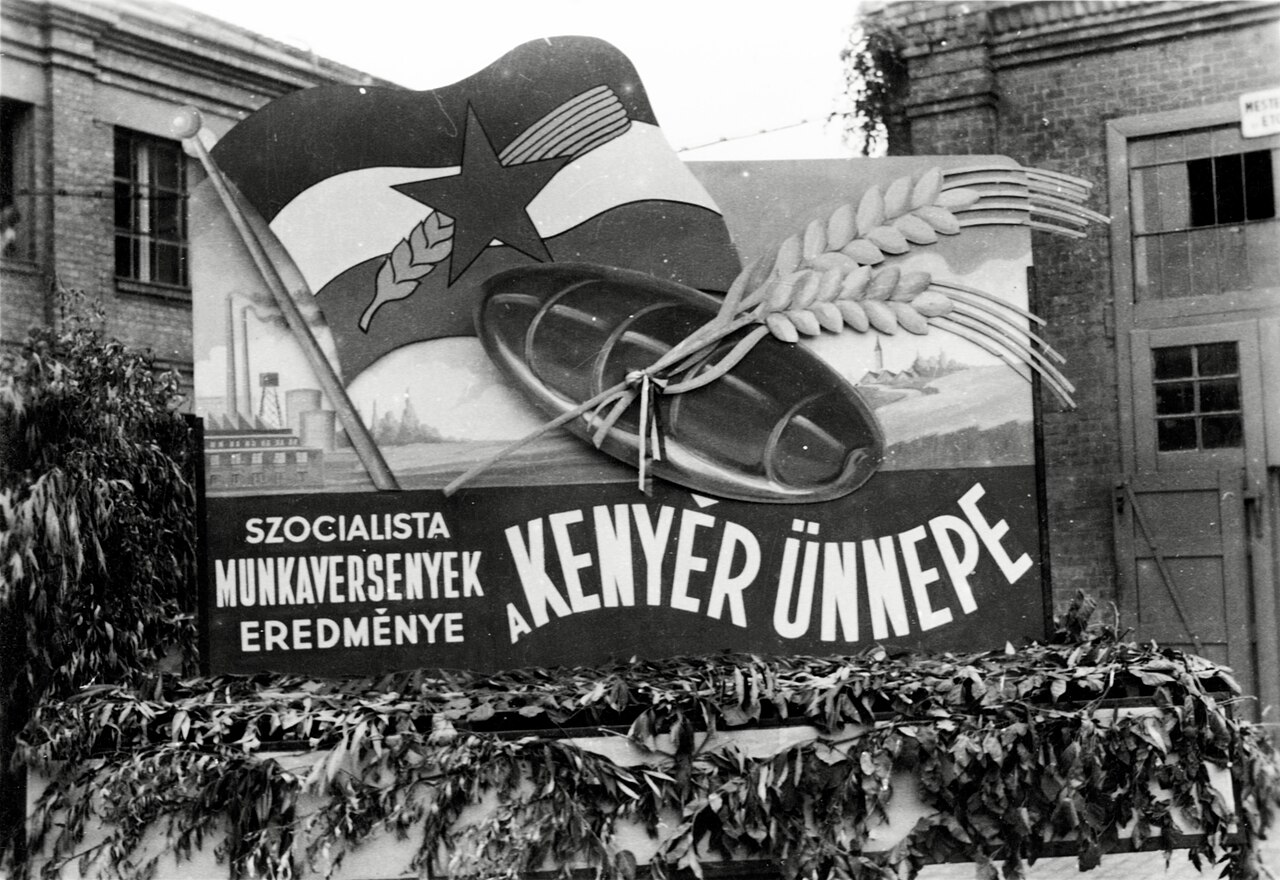
In November 2018, UN special rapporteur on extreme poverty and human rights, Phillip Alston, painted a damning indictment of food inequality on an official UN mission. Such missions and the reports they generate often pass uncommented upon – another contribution to the litany of evidence of capitalism’s crimes, shorn of emotional weight by both their ubiquity and technocratic formulation. Yet this particular visit garnered unusual exposure in the British media ecosystem, detailing as it was the devastating consequences of austerity on the nation’s working classes and their ability to reproduce themselves. Part of Alston’s visit included a trip to Newcastle’s West End foodbank – a part of social infrastructure which has come to exemplify the intensified class war waged throughout the long neoliberal turn. Here, Alston was told of the degrading conditions faced by those forced to somehow choose between the basic necessities they required in order to live. The details shocked many, and rightly so. And yet.
Fast forward to 2026 and the issue has only worsened. From an estimated 7% in 2018, by January 2025, 14% of households were affected by food insecurity in the UK. As can be depressingly expected, groups who can be classed as most vulnerable – households with children, those on welfare benefits, and those with disabilities – face the highest rates of insecurity. The straightforward catalyst for this worsening state of affairs is all too obvious for those of us who’ve done a double-take when assessing the receipt for the weekly grocery shop. Food price inflation in recent years has skyrocketed, with little sign of abating. Particular causes are specific to Britain – the disruptions in trade relations due to Brexit, for example. But taking a step back, we can position this trend within a wider global food crisis, which is itself entangled with economic, geopolitical and climate crises, all interlinking and overlapping with one another.
The structural features of the global food system have been put under tremendous strain before. The early period of the 1970s witnessed a combination of energy, geopolitical and climate stressors which drove prices of staple crops up rapidly, for example. But in the context of climate breakdown, the UK finds itself particularly exposed to both an overall upwards trend in prices – as productivity declines in a heating world – in addition to rapid shocks, caused by any number of potential extreme weather events impacting supply. The government is fully aware of this fact. The most recent national security assessment on ecosystem collapse details our collective vulnerability, due in most part to heavy reliance on imports for both food and fertiliser, as well as domestic ecosystem degradation threatening national agriculture. Despite this awareness, vanishingly little has been done to make the required changes toward sustainable food production, distribution and consumption. But this is of course in keeping with the pitiful efforts proffered by the Starmer government on the issue of climate adaptation and mitigation.
Indeed, as Nicholas Beuret rightly notes, we must face the reality that, as during the pandemic and its immediate aftermath, capitalism will attempt to reformulate existing class relations in the era of worsening climate conditions. Rather than attempting to reconcile with the working class, by integration into a new economic and political settlement, Labour seem intent on merely controlling the social consequences of deepening inequality through authoritarian means. Food is one of several inelastic commodities (along with energy, housing, water and healthcare) through which we are immiserated by a corporate elite. The current system is reliant on a mixture of concentration and uniformity. As Raj Patel has illustrated, food systems in the Global North resemble hourglasses with regard to their profit flows. At every step of the production process, farmers are forced to accede to the demands of input suppliers and produce buyers with overwhelming market dominance. At one end, seeds, animal feed, fertilisers and pesticides are controlled by a small number of agricultural trading companies. Not only does this limit price competition, but it tends toward the growing of industrialised monocultures with deleterious ecological results. At the other, a select few supermarket chains dictate the prices they pay to farmers from a position of asymmetrical power. Capable of only negotiating with few potential buyers and holding perishable goods, farmers therefore carry the burden of exposure to the impacts of flooding or soil degradation, without being able to pass on costs up or down the chain.
Factors contributing to fraught farming conditions for British farmers may only be understood in relation to the global food system, however. The expansion of alternative regimes of agricultural accumulation in the Global South serves to push wages down across the board, but there is a clear distinction to be made in the modes of food system between the imperial core and that of the periphery. As Ajl shows, the historical process of agricultural value-flow from periphery to core is ensured and embodied through programs of structural adjustment – forcing countries in the periphery to focus on their ‘comparative advantages’, in return for financing. In practice, this means cultivation of a narrow range of cash crops – sugar, palm oil, coffee, tropical fruits – for export. These items are then fed as base inputs into a globalised system of food processing, which is entirely focused on generating commodities marketed for maximum value at wealthier Western consumers. Perversely, being coerced into this system denudes peripheral nations of the finances and capacity to produce foodstuffs required for their own subsistence, thereby placing themselves just as vulnerable to the volatility of international food markets as the UK, but with far less purchasing power.
The irrationalities of this capitalist-imperialist food system have certainly long been acutely experienced by those working in a notoriously fickle and unstable trade. But as referenced above, the current ‘polycrisis’ has rendered food consumption as a prime factor in capital’s assault on working people. As Isabella Weber has meticulously demonstrated, the confluence of the Covid pandemic, the full-scale invasion of Ukraine, and intensified climate stressors spiked the cost of household essentials. In a context of rising prices for key inputs – natural gas, or wheat, for example – firms acted to protect, or even increase their profit margins. Under the cover of a generalised sense of market volatility, localised price spikes were converted into general inflation in what Weber terms “sellers’ inflation”. The supermarket sector in many countries being highly concentrated, the dominant players capitalised on the moment to exploit consumers who have no other choice but to pay for essential goods.
These challenges have already been a considerable cause of popular immiseration of the working classes in Britain, and if food networks remain the same, we can only expect conditions to deteriorate further with increased ‘climateflation’. Beyond well-meaning but flawed interventions such as the ‘Don’t Pay’ campaign, and the growing phenomenon of individual acts of rebellion – see the growing proliferation of the ‘five-finger discount’ – a truly mass militant campaign around the politics and price of food is yet to be waged. Food is both a commodity upon which all of human reproduction is necessary, as well as being intimately tied to ecological struggles. The task for the ecosocialist left is to take the felt experience of conflict over access to food, and to generalise it into a broader class antagonism contesting this system which deprives us of the things we need to live.
As evident from the analysis above, a wholesale revolution of the entire food system is necessary. Yet as with the wider project of ecosocialist transition, strategic realities must place this within a context of distinct temporalities. In the immediate, ecosocialist within both Your Party and the Greens should be pushing for policies aimed at decommodifying food. The Autonomy Institute outlines several steps which could act as urgent short-term demands, such as a price cap system on a range of food goods, or the provision of a basket of essentials to households which could be paid for via a windfall tax on the beneficiaries of ‘greedflation’. Such demands must be articulated within the frame of a more encompassing argument in favour of an ecological planning approach to our systems of production, handing democratic control over to people of how they eat, but more generally, live. Jonas Marvin’s excellent Substack article on precisely this theme, highlights the catalysing impact Zohran Mamdani’s publicly-owned municipal grocery stores could have for engendering visions of emancipatory lifeworlds. Closer to home, Nourish Scotland have been leading the effort to revive affordable, decent restaurants as part of the push for ‘public luxury’ – in doing so valuing the sociality of food and space over austerian alienation. In addition to forging a sense of cultural solidarity around access to food, such diners could be used to promote agro-ecological domestic food systems through stable procurement contracts. ‘Peace, land and bread’ served as the rallying cry uniting the Russian dispossessed. Over a century on and still facing the fundamental foe of capitalist exploitation, we could do worse than to shout the same.
Leave a Reply